Visual Inspection: The Missing Link Between Automation and Quality Control
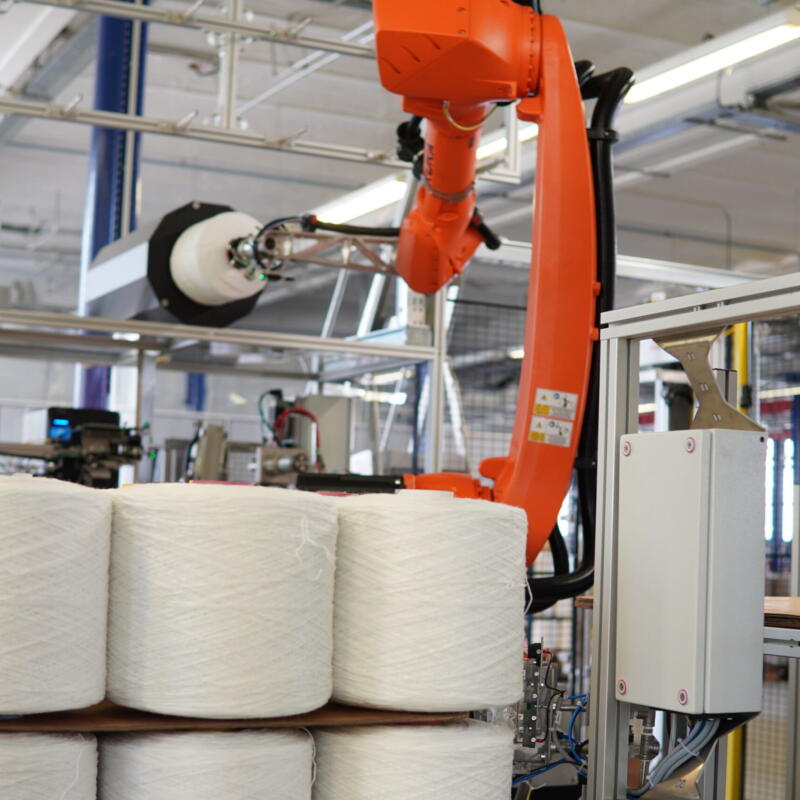
Automation has transformed textile manufacturing over the last decades. Robotic systems, automated handling solutions and intelligent production lines have significantly improved productivity while reducing manual operations.
Yet, one critical challenge remains for many manufacturers: ensuring consistent product quality throughout the production process.
While production flows become increasingly automated, quality control often continues to rely on manual inspections, operator experience and visual checks performed at different stages of production.
This is where Visual Inspection becomes a key component of modern textile automation.
Automation Is No Longer Just About Productivity
For years, industrial automation has primarily focused on increasing throughput and reducing labor-intensive operations.
Today, manufacturers face additional challenges:
- Maintaining consistent quality across multiple shifts
- Managing increasingly diverse yarn portfolios
- Reducing production interruptions
- Improving traceability
- Meeting higher customer quality expectations
As production speeds increase and manufacturing environments become more complex, manual quality control alone is often no longer sufficient.
Modern automation systems must not only execute tasks.
They must also verify that those tasks have been performed correctly.
Why Quality Control Remains a Challenge
Textile production environments handle a wide variety of materials, yarn constructions and package formats.
Even small deviations can create significant impacts downstream, leading to:
- Production interruptions
- Additional manual interventions
- Material waste
- Customer quality claims
- Reduced production efficiency
Traditional inspection methods often depend on operator availability and individual experience.
This can lead to inconsistencies between shifts and production sites.
For manufacturers operating 24/7, maintaining the same level of quality control around the clock becomes increasingly difficult.
Integrating Visual Inspection Into the Production Flow
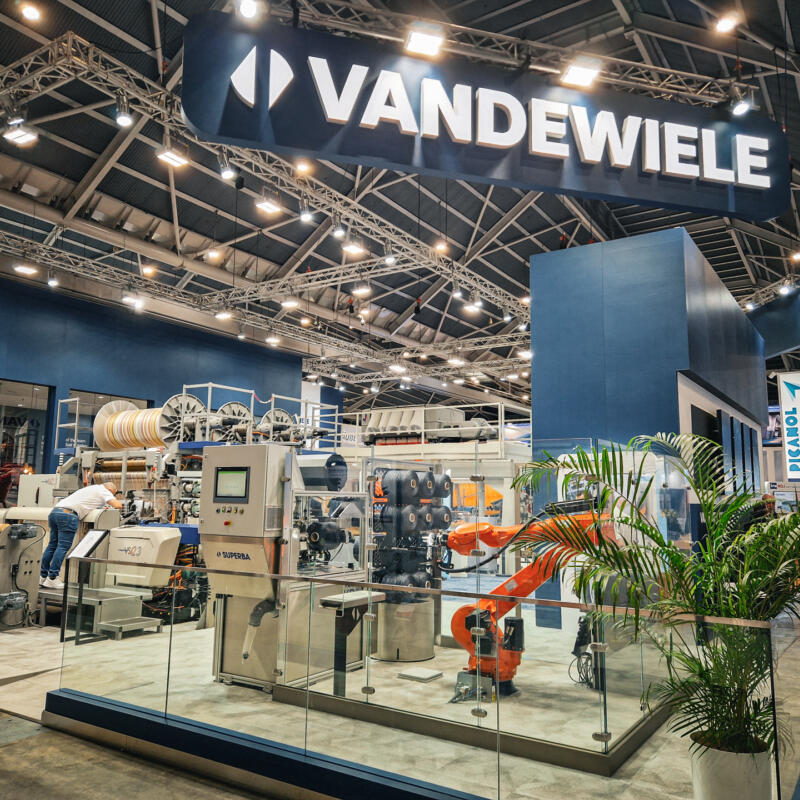
At Vandewiele Automation, Visual Inspection is not considered a standalone system.
It is part of an integrated automation platform designed to support the entire production process.
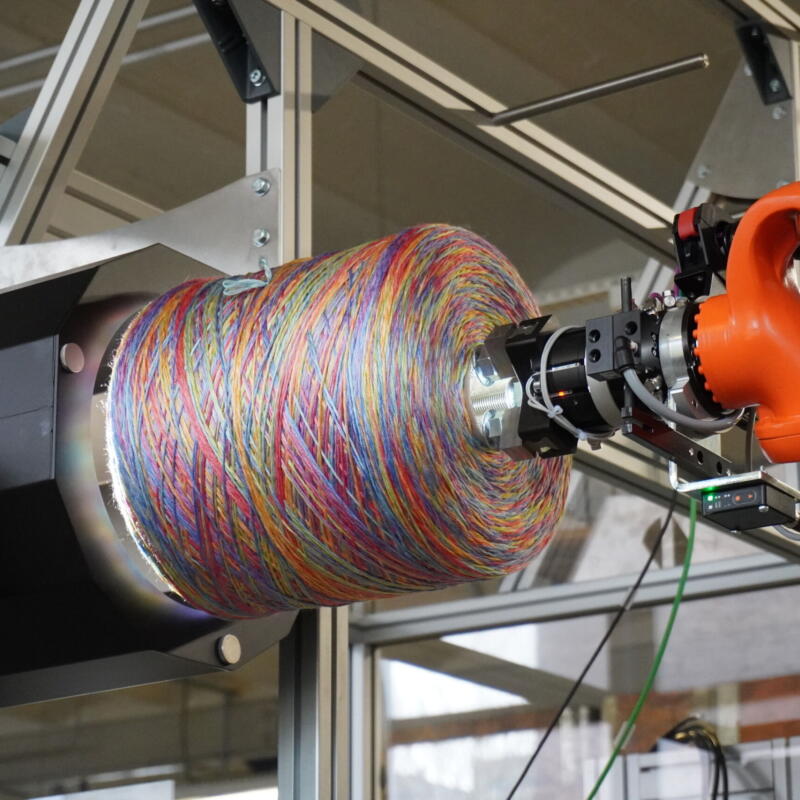
By combining robotics, AI Vision and automated process control, Visual Inspection can be seamlessly integrated into critical production steps such as:
- Automatic knotting
- Yarn stripping
- Labelling
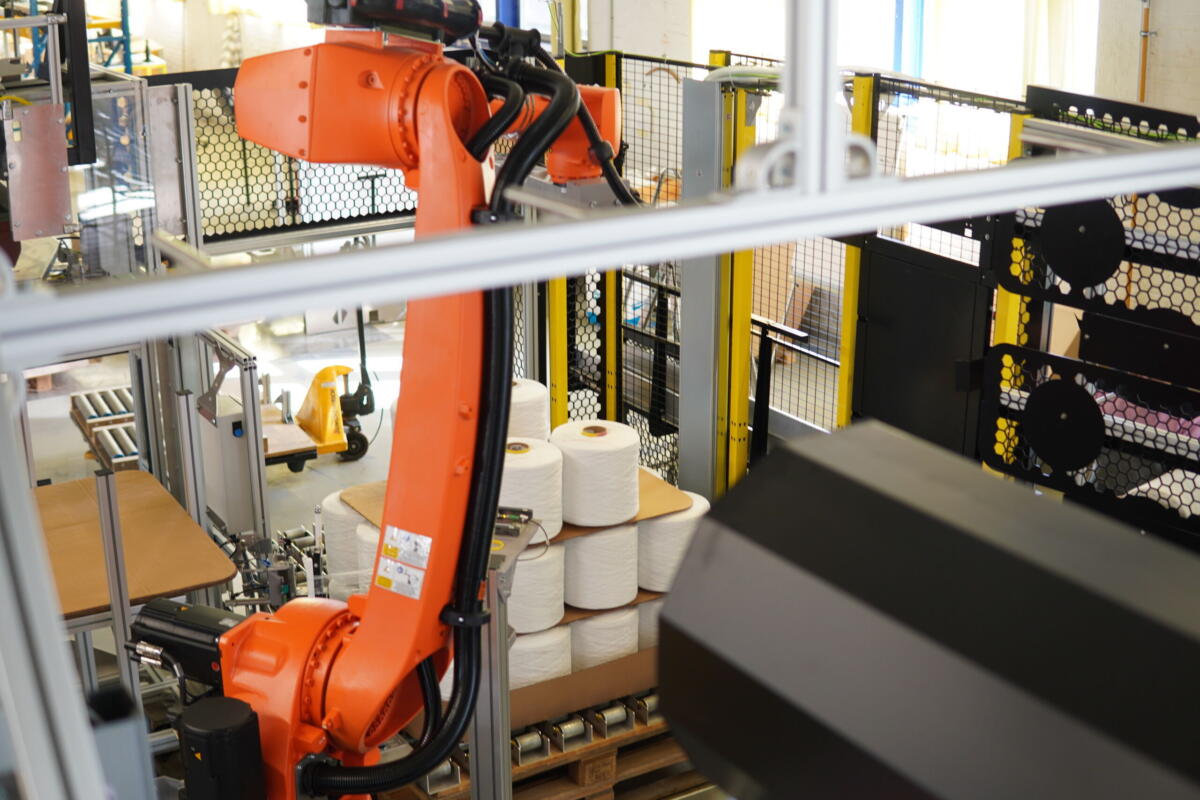
- Packing and palletizing
- Product traceability processes
Rather than adding another inspection station at the end of the line, quality validation becomes an active part of the production flow itself.
This approach allows manufacturers to identify potential issues earlier while maintaining continuous production.
From Quality Control to Quality Validation
The objective of modern Visual Inspection is not simply defect detection.
It is about validating process quality in real time.
Advanced camera systems continuously monitor production conditions and verify predefined quality criteria throughout the process.
This creates several benefits:
Standardized Quality
Automated inspections apply the same validation criteria to every product, regardless of shift patterns or operator availability.
Improved Traceability
Inspection data can be linked to production information, supporting greater product traceability and process transparency.
Reduced Downtime
Early detection of anomalies allows corrective actions to be taken before issues impact larger portions of production.
Increased Operational Stability
By continuously validating process quality, manufacturers can achieve more stable and predictable production performance.
AI Vision: The Next Step in Textile Automation
Visual Inspection technologies continue to evolve rapidly.
The next generation of automation systems combines advanced camera technology with AI-supported analysis to enhance quality control capabilities even further.
These systems can help:
- Improve defect detection
- Increase inspection consistency
- Support automated quality decisions
- Generate valuable production insights
- Prepare production environments for future digital integration
The result is a smarter automation environment capable of supporting both operational efficiency and quality excellence.
Building the Textile Industry of Tomorrow
The future of textile manufacturing is not simply about adding more automation.
It is about creating intelligent production environments where robotics, AI Vision and process control work together to improve productivity, reduce costs and standardize quality.
At Vandewiele Automation, we believe that Visual Inspection is one of the key technologies enabling this transformation.
Because true automation is not only about moving products faster.
It is about ensuring that every product meets the same quality standards, every time, throughout 24/7 production.
The future of textile automation is not only automated.
It is intelligent.