Automated Quality Control: How the KR1 Redefines Artificial Turf Yarn Inspection
As bobbin preparation becomes increasingly automated, manufacturers face a key operational challenge: how can quality checks be integrated directly into the automated workflow?
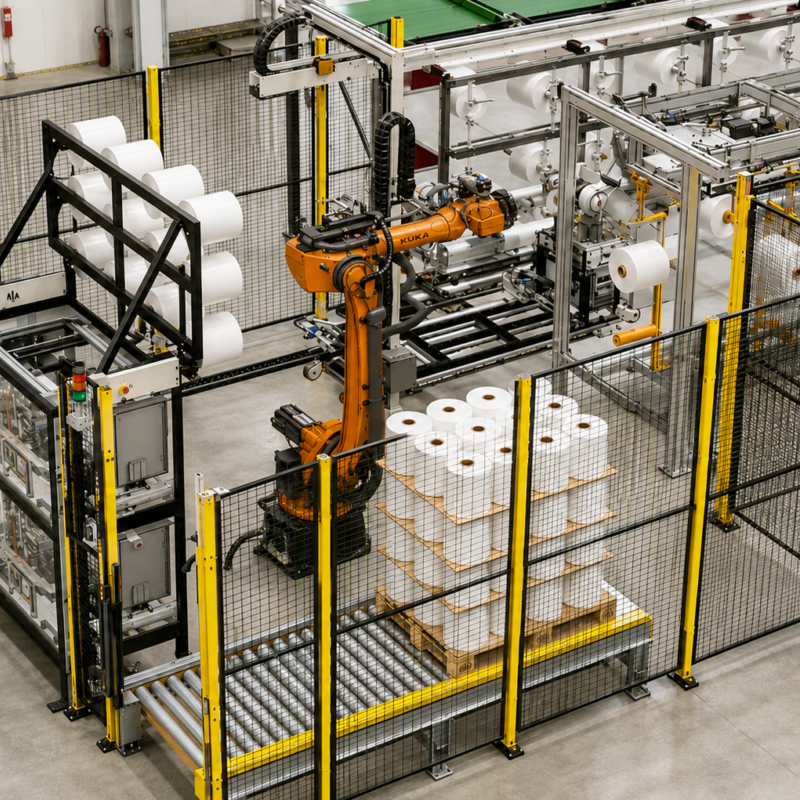
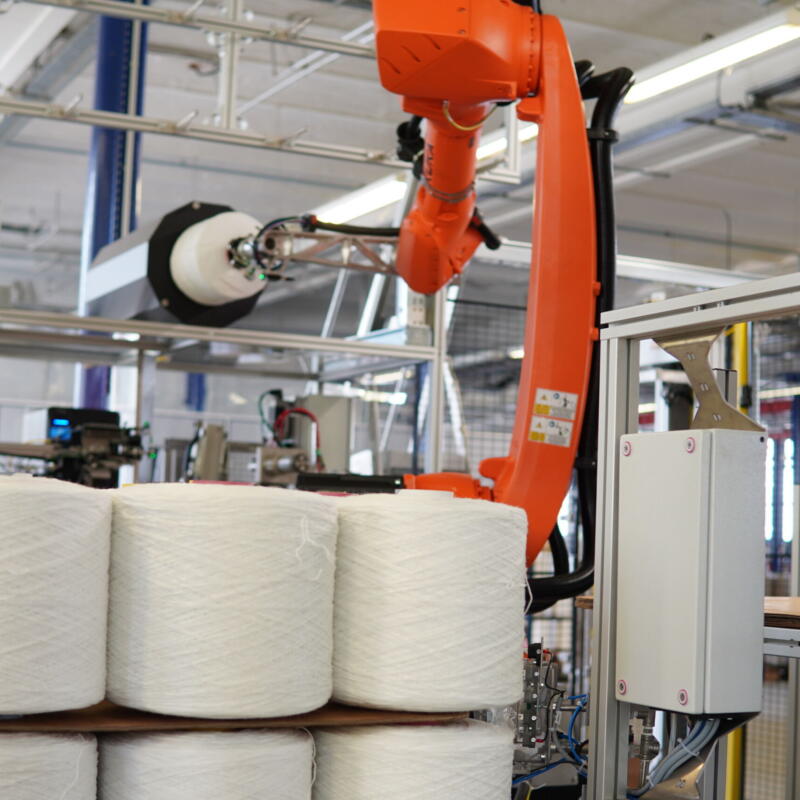
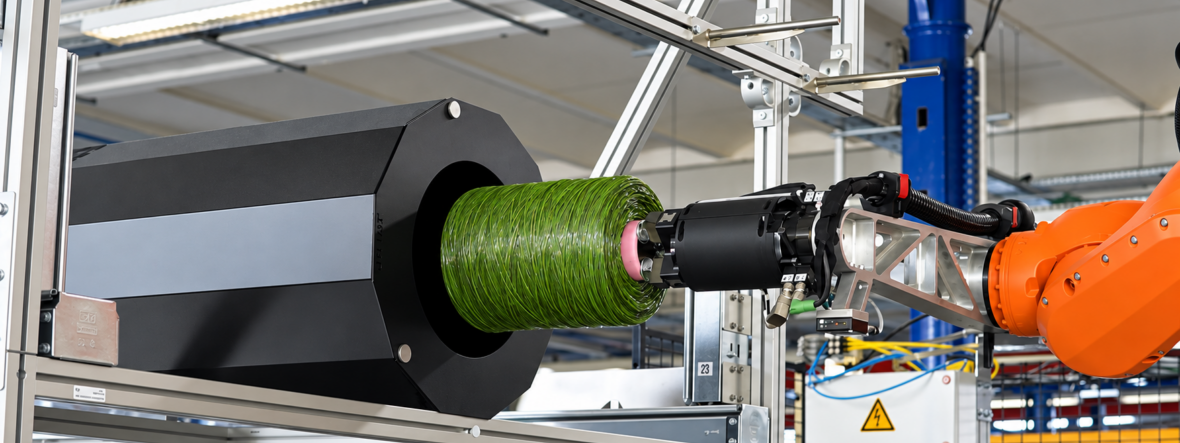
To address this, Vandewiele Automation has expanded the capabilities of the KR1 robotic system for artificial turf yarns. The KR1 environment combines mechanical bobbin handling with an integrated quality control sequence: starting with automated knotting, moving to yarn sampling and detailed sample analysis, and completing the process with optical bobbin side inspection.
Automated Knotting: Preparing the Bobbin
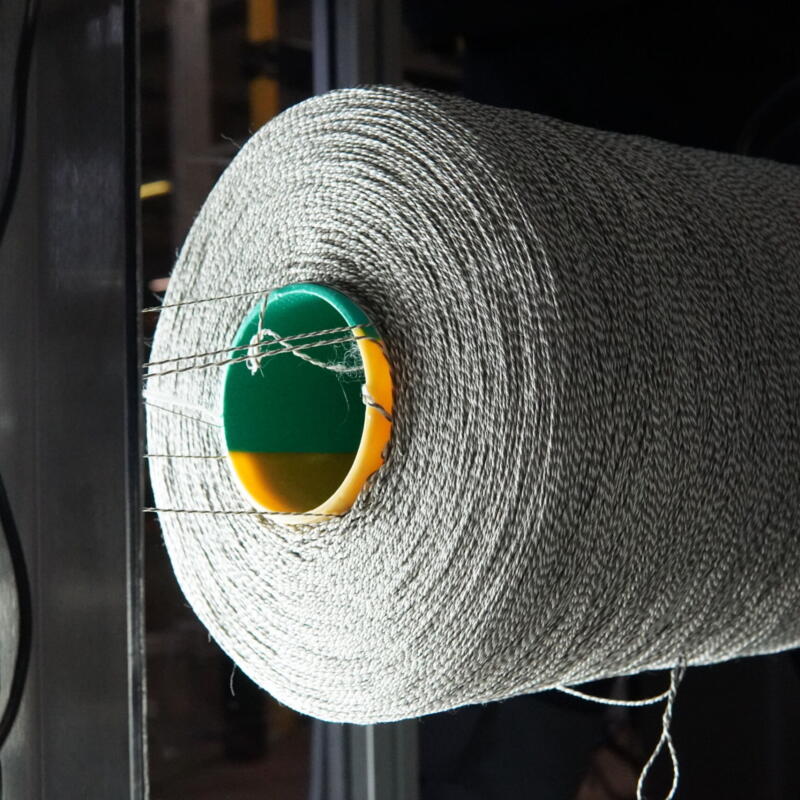
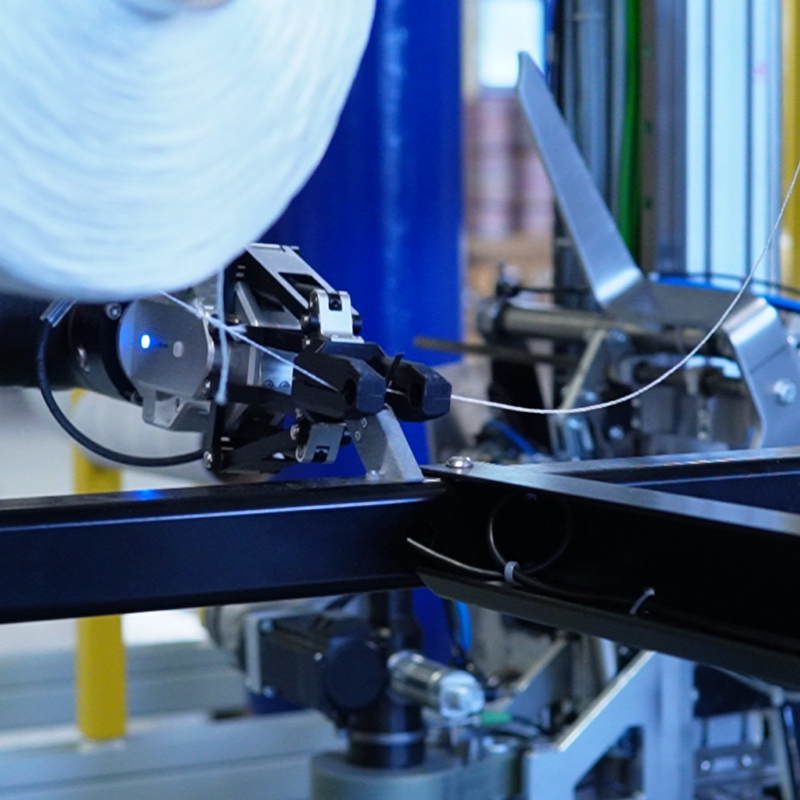
Before inspection takes place, the KR1 performs an automated knotting operation to secure the yarn tail on the bobbin.
This step reduces manual handling and provides a repeatable preparation sequence before the bobbin proceeds to yarn sampling.
Automated Yarn Sampling: Preparing for Inspection
To move from a full bobbin to a sample suitable for optical inspection, the KR1 uses an automated yarn sampling mechanism.
The system extracts a small segment of yarn directly from the package and positions it on a dedicated inspection stage.
This automated preparation reduces the need for manual sampling and presents the yarn sample under controlled conditions for optical analysis.
Yarn Sample Analysis: Counting Filaments by Colour
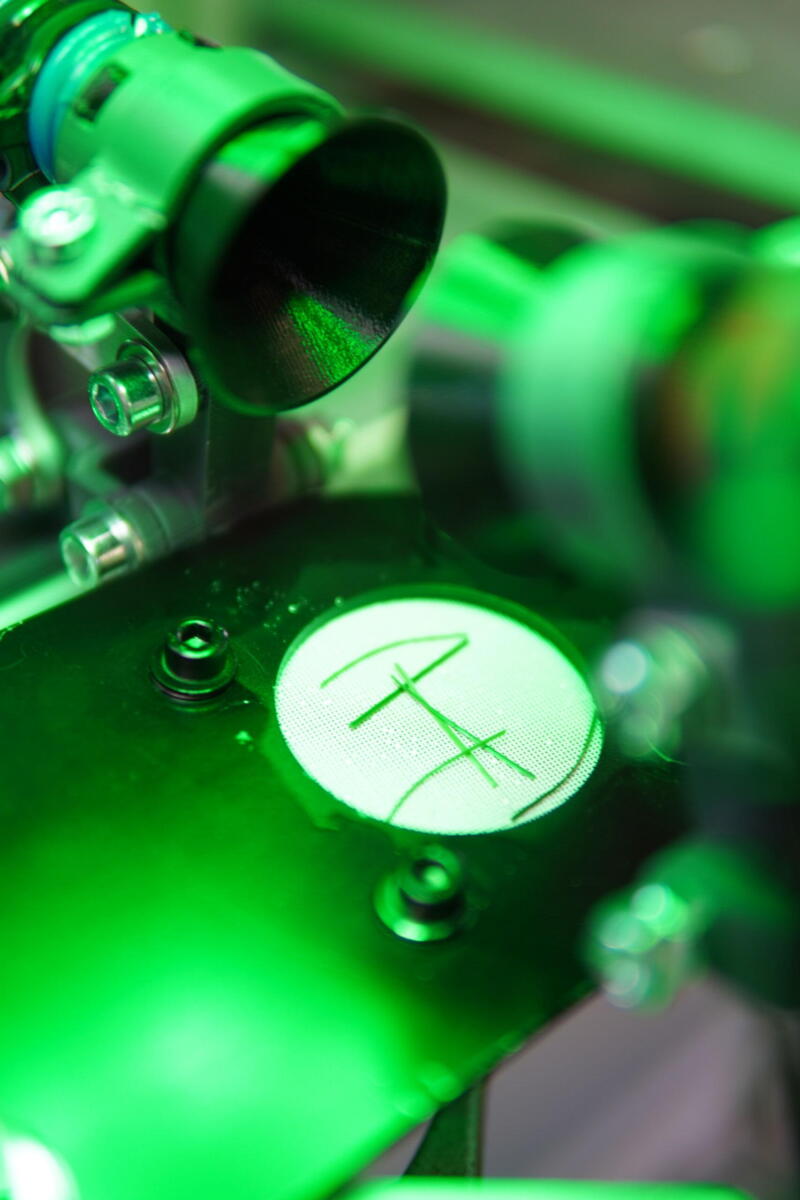
Once positioned on the inspection stage, the yarn sample undergoes optical filament analysis:
Adapted Lighting & Optical Filters: Tailored illumination wavelengths, such as blue or green light, work with optical filters to provide suitable contrast for filament analysis. The optical setup is adapted to the characteristics of the yarn being inspected.
Selective Analysis Views: The software analyses the sample using different views to distinguish all filaments, only dark filaments or only light filaments.
Filament Counting by Colour: By counting filaments within these categories, the system provides information about the filament count and colour distribution in the sample. This information supports verification against defined yarn specifications.
Bobbin Side Inspection: Checking the Winding Surface
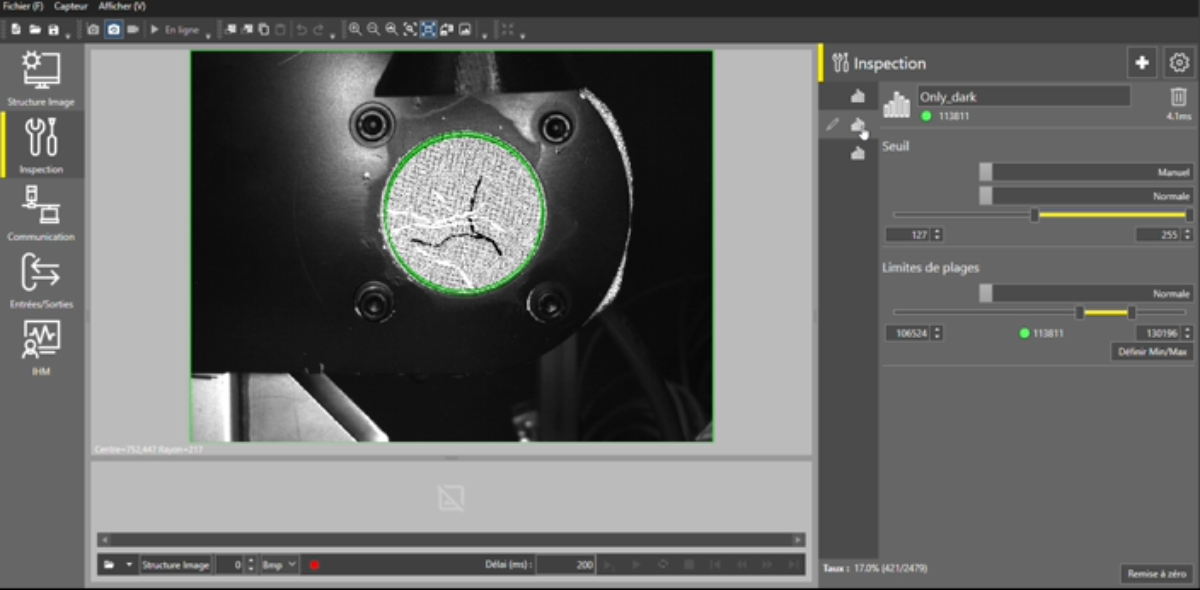
While sample analysis examines filament count and colour distribution, bobbin side inspection checks the winding surface. It provides complementary information that sample analysis alone cannot reveal.
Detection of Winding Surface Anomalies: The camera inspects the bobbin side for defined anomalies, such as foreign yarn, mixed yarn, spider-web defects and visible contamination.
AI Classification & Pixel-Based Analysis: Depending on the inspection task, software tools include AI-based defect classification and image binarization with pixel measurement. These tools evaluate the inspected areas against defined acceptance criteria to support a pass/fail assessment.
Bringing Quality Checks into the Automated Workflow
By combining automated knotting, yarn sampling, sample analysis and bobbin side inspection, the KR1 integrates quality checks into a repeatable automated process.
For manufacturers, bringing these checks into the handling sequence offers several operational benefits:
Repeatable Inspection: Defined inspection criteria help reduce variability associated with manual visual checks.
Reduced Manual Work: Automated sampling and inspection reduce repetitive manual tasks, allowing operators to focus on monitoring the process and addressing exceptions.
Application-Specific Inspection Criteria: Inspection settings and acceptance thresholds can be configured according to the yarn characteristics and the customer’s quality requirements.
Discuss Your Artificial Turf Yarn Application
Every artificial turf yarn application has specific requirements, from filament counts and colour combinations to acceptable winding surface conditions.
Interested in integrating quality checks into your automated bobbin preparation process? Contact our technical team to discuss your yarn specifications, review the defects you need to detect and explore a KR1 demonstration tailored to your application.